
Play Le Pharaoh Now!
Home → Strategy
Le Pharaoh Strategy
Approaching Le Pharaoh sensibly
The theoretical return to player for Le Pharaoh stands at 96.18%, which establishes a house edge of exactly 3.82% over extended play periods. This percentage represents the average loss per unit wagered across millions of spins, rather than a guarantee for any single session or limited time frame. Players should understand that this mathematical expectation applies only to very long runs and does not predict short-term volatility or immediate results.
Hacksaw Gaming offers other RTP configurations for this title, specifically 94.33%, 92.26%, and 88.24%, which significantly alter the expected return on investment for participants. The highest configuration of 96.18% provides the most favorable conditions, while the lowest setting of 88.24% increases the casino's advantage substantially. Selecting the correct version affects the long-term financial outcome, making the specific game variant a critical factor in strategic planning.
In comparison, Le Cowboy by Hacksaw Gaming features an RTP of 96.28%, offering a slightly lower house edge than the primary setting of Le Pharaoh. This marginal difference of 0.10% may influence decisions for players who prioritize statistical efficiency when choosing between similar slot titles from the same developer. Both games share medium volatility, but the distinct return percentages require careful consideration when allocating bankroll resources across multiple gaming options.
Bankroll rules that hold up
A flat betting strategy involves wagering the same stake amount during every round, which prevents rapid depletion of the bankroll compared to progressive staking methods. Progressive staking raises stakes after losses, which does not change the built-in edge and only shortens the time to ruin for the player. Maintaining a consistent bet size allows the theoretical RTP of 96.18% to manifest more accurately over a larger sample size of spins.
The maximum win potential of 15000x on Le Pharaoh requires a sufficiently large bankroll to withstand the medium volatility inherent in the game mechanics. A player risking 1% of their total bankroll per spin can endure approximately 100 consecutive losing rounds before exhausting their funds entirely. This buffer ensures that temporary downswings do not force premature termination of the session before hitting a winning combination or bonus feature.
Le Cowboy presents a higher maximum win cap of 25000x, demanding even greater reserve capital to survive its identical medium volatility profile effectively. While both slots offer substantial payout potential, the specific multiplier limits dictate different risk management approaches depending on the available playing funds. Allocating sufficient reserves ensures that players can fully exploit the high-variance nature of these Hacksaw Gaming releases without financial distress.
Bet sizing against volatility
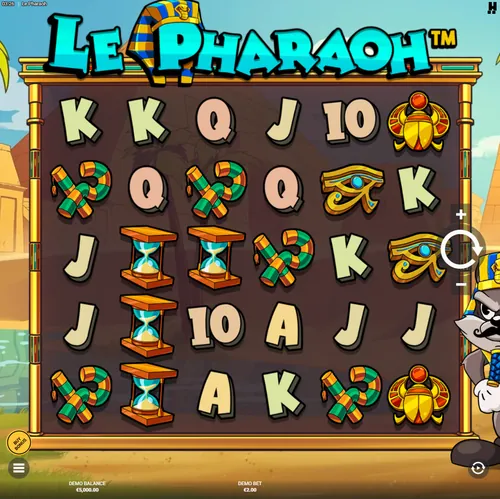
Le Pharaoh operates on a 6-reel layout with 19 paylines, creating a medium volatility experience that balances frequency and size of wins for participants. This structure differs from high-variance games that rarely pay out but offer massive jackpots, requiring players to adjust their bet sizes accordingly. Smaller bets help sustain gameplay through dry spells, while larger wagers capitalize on the sticky re-drops feature when it activates successfully.
The 6x5 grid configuration used in Le Cowboy mirrors the reel structure of Le Pharaoh, yet the max win of 25000x suggests higher variance potential. Players might increase bet sizes cautiously on Le Cowboy to target the larger top prize, whereas conservative sizing suits Le Pharaoh's 15000x ceiling. Understanding these distinctions helps align stake amounts with personal risk tolerance and the specific mathematical properties of each slot title.
Medium volatility implies that win frequencies are moderate, requiring bet sizes that align with the duration of intended playing sessions and total budget constraints. Wagering too highly accelerates bankroll erosion due to the inevitable losing streaks associated with this volatility level, regardless of the RTP percentage. Proper bet sizing ensures that the 96.18% return can be tested over thousands of spins without prematurely ending the gaming activity.
Session limits worth setting
Setting a strict time limit for playing Le Pharaoh helps manage exposure to the 3.82% house edge accumulated over continuous spinning cycles. Without boundaries, players may fall into prolonged sessions where the mathematical disadvantage inevitably reduces their initial deposit toward zero over time. Defining clear start and end points protects the bankroll from emotional decision-making and ensures that gambling remains a controlled entertainment activity.
The 100 free spins included in the welcome bonus package provide a fixed number of attempts to trigger features without risking additional deposited funds directly. These spins allow players to experience the sticky re-drops mechanic and Egyptian theme elements while minimizing the impact of the standard RTP calculation. Utilizing these complimentary rounds effectively extends playtime and potentially generates withdrawable winnings independent of the main bankroll allocation.
Comparing session durations to Le Cowboy reveals similar time-management needs due to its matching medium volatility and comparable reel layout structure. Both games reward disciplined play, as excessive spinning erodes funds faster than the theoretical return rate would suggest in isolated short bursts. Establishing daily loss limits complements time caps, ensuring that the 96.18% expectation is evaluated over realistic periods rather than impulsive marathons.
Why chasing losses fails
Chasing losses by increasing bet sizes after defeats does not alter the fixed 96.18% RTP or reduce the 3.82% house edge established by Hacksaw Gaming. Each spin remains an independent event with identical probabilities, meaning previous outcomes have no bearing on future results in this random number generator system. Escalating wagers merely accelerates the depletion of the bankroll, leading to quicker ruin without improving the chances of recovering lost funds.
The maximum win cap of 15000x on Le Pharaoh sets a hard upper limit on payouts, preventing infinite recovery scenarios that some betting systems falsely promise. No progression strategy can overcome the negative expectation value created by the house edge, regardless of how frequently bets are adjusted during a session. Accepting losses as part of the medium volatility experience preserves remaining capital for future sessions where luck may align with the statistical mean.
Le Cowboy’s 25000x max win offers a larger potential payout window, but chasing losses on this title suffers from the same mathematical impossibility. Increasing stakes to recoup deficits ignores the fact that the probability of hitting the top prize remains constant and extremely low per spin. Rational players focus on managing their bankroll responsibly rather than attempting futile strategies to defeat the built-in advantage of the casino game.
Le Pharaoh: key facts
| Parameter | Value |
|---|---|
| Game | Le Pharaoh |
| Studio | Hacksaw Gaming |
| RTP | 96.18% |
| House edge | 3.82% |
| Volatility | medium |
| Max win | 15000x |
| Reels | 6 |
| Paylines / ways | 19 |
Common systems and their limits
Le Pharaoh offers a theoretical RTP of 96.18% while Le King provides 96.14%, establishing a baseline for expected returns across Hacksaw Gaming titles. The house edge remains fixed at 3.82% for the primary configuration, meaning long-term erosion is inevitable regardless of betting patterns. Players must recognize that no strategy alters this mathematical reality, as the casino retains its statistical advantage over millions of spins. Consequently, any system claiming to overcome the edge fails against the immutable laws of probability and variance.
The maximum win cap sits at 15000x the stake, a figure significantly lower than the 20000x potential found in Le King from the same developer. This limitation restricts the upside for high-stakes players seeking massive payouts from a single round on the 6-reel layout. A flat bet of 2 € yields a theoretical return of 1.92 €, illustrating the slow accumulation of losses during extended sessions. Such caps ensure the operator manages risk effectively while providing players with clear expectations regarding potential rewards.
Hacksaw Gaming structures the volatility as medium, balancing frequency of wins with payout sizes to sustain gameplay duration. This setting contrasts with higher volatility alternatives that might offer larger but rarer hits, affecting bankroll management strategies. The 19 paylines provide multiple opportunities for small returns, yet the overall return percentage remains anchored to the 96.18% figure. Understanding these mechanics helps players set realistic goals and avoid chasing losses based on unrealistic win probabilities.
Flat betting explained
Flat betting involves wagering the same stake every round, such as 1 € or 5 €, without adjusting amounts based on previous outcomes. This method preserves bankroll stability by preventing rapid depletion during losing streaks common in games like Le Pharaoh with 96.18% RTP. By maintaining consistent exposure, players can endure the medium volatility inherent in the 6-reel slot structure longer than variable stakers. The approach minimizes emotional decision-making and keeps the session duration predictable within the constraints of the house edge.
The maximum win of 15000x applies equally to flat bets, meaning a 1 € wager could theoretically yield 15000 € on a single spin. However, achieving this requires hitting specific symbol combinations across the 19 paylines, which occurs with low frequency due to the medium volatility setting. Consistent betting allows players to track their net result accurately against the theoretical return, facilitating better financial planning. This transparency helps distinguish between short-term variance and the long-term mathematical expectation defined by the game provider.
Le King demonstrates similar flat betting dynamics with its 96.14% RTP and 20000x max win, offering a slightly higher ceiling for returns. Comparing these figures highlights how minor RTP differences accumulate over thousands of spins, impacting total profitability. A player using flat stakes on Le Pharaoh will experience slower variance swings compared to progressive systems, reducing the risk of ruin. This steady approach aligns well with the medium volatility profile, ensuring a more controlled and manageable gaming experience.
Progressive staking risks
Progressive staking increases wagers after losses, attempting to recover deficits quickly but fundamentally altering the risk profile of playing Le Pharaoh. While the RTP remains 96.18%, raising stakes during downturns accelerates bankroll depletion because the house edge applies to larger amounts. This strategy does not change the built-in mathematical advantage held by the casino, only the speed at which funds are lost. Players often underestimate the capital required to sustain such increases, leading to premature termination of their session.
The medium volatility of Le Pharaoh means losing streaks can occur frequently enough to trigger aggressive betting responses in progressive systems. A sequence of ten losses on 1 € bets results in a 10 € deficit, requiring exponential increases to break even, which quickly exceeds table limits. In contrast, Le King’s 20000x max win might tempt players to chase large payouts, but the underlying risk of ruin remains identical. The 6-reel grid offers no mechanical protection against the mathematical certainty of negative expectation over time.
Comparing the 15000x max win of Le Pharaoh with Le King’s 20000x reveals that higher caps do not justify increased risk through progressive methods. Even with a larger potential payout, the probability of reaching it remains extremely low, making recovery strategies statistically unsound. A flat bettor facing the same 3.82% house edge preserves more capital for future sessions than a progressive staker who chases losses. Ultimately, the game’s design favors patience and consistency over risky attempts to manipulate outcome sequences.
What the maths actually allows
The 96.18% RTP dictates that for every 100 € wagered on Le Pharaoh, approximately 96.18 € returns to players over an infinite number of spins. This theoretical value assumes perfect play and vast sample sizes, ignoring the short-term randomness inherent in any single gaming session. The 3.82% house edge represents the casino's profit margin, which is guaranteed mathematically but distributed randomly among participants. Understanding this distinction prevents players from attributing temporary losses to bad luck rather than statistical inevitability.
Medium volatility ensures that wins occur with moderate frequency, providing regular feedback loops that sustain engagement without extreme bankroll swings. A player betting 2 € per spin on the 19 paylines experiences smaller, more frequent payouts compared to high volatility slots with fewer winning combinations. This balance supports longer playtimes, allowing the RTP to manifest more closely to its theoretical limit over hundreds of hours. The 6-reel layout adds complexity to symbol alignment, further influencing the distribution of wins and losses across the grid.
Le King’s 96.14% RTP and 20000x max win offer a comparable framework for analysis, highlighting slight variations in expected returns and payout potential. The 0.04% difference in RTP may seem negligible but accumulates significantly over tens of thousands of spins, affecting long-term profitability. Both titles share the same developer, Hacksaw Gaming, ensuring similar underlying algorithms despite different thematic presentations and win caps. Players should evaluate these metrics objectively to choose games that align with their risk tolerance and financial goals.
Reading variance honestly
Variance in Le Pharaoh reflects the deviation of actual results from the expected 96.18% RTP, creating periods of significant profit or loss. Medium volatility suggests that these deviations are less extreme than in high-variance games, yet still substantial enough to impact short-term bankrolls. A player experiencing a cold streak might see their balance drop rapidly before a hot streak restores it, illustrating the random nature of outcomes. Recognizing this pattern helps manage expectations and reduces the temptation to alter strategies based on recent performance.
The 15000x max win represents the upper bound of variance, occurring rarely but providing a dramatic payoff when triggered on the 6-reel grid. Such events are independent of previous spins, meaning past losses do not increase the likelihood of a future big win in this slot. Comparing this to Le King’s 20000x cap shows that higher multipliers exist in the market, but they come with corresponding adjustments in hit frequency. Players must accept that variance works both ways, potentially eroding gains just as quickly as it creates them.
Hacksaw Gaming’s design choices for Le Pharaoh, including the 19 paylines and medium volatility, aim to balance excitement with sustainable gameplay. These parameters ensure that while wins are possible, they are distributed in a way that maintains the 3.82% house edge over time. Players who understand this dynamic can enjoy the entertainment value without falling prey to misconceptions about controlling outcomes. Honest assessment of variance leads to more responsible gambling habits and clearer appreciation of the game’s mathematical structure.
Learning the game in demo first
The theoretical return to player for Le Pharaoh stands at 96.18%, which implies a house edge of 3.82% over an extended session. This percentage represents a long-term average across hundreds of thousands of spins rather than a short-term guarantee. Players should use this metric to understand the mathematical expectation before committing real funds to any spin.
Alternative configurations exist with RTP values of 94.33%, 92.26%, and 88.24%, highlighting significant variance in potential returns. Comparing these against Wanted Dead or a Wild, which offers 96.38%, reveals that Le Pharaoh is not the highest returning option available. Understanding this difference helps players set realistic expectations for their bankroll longevity during play sessions.
The medium volatility of Le Pharaoh suggests a balanced frequency of wins compared to high-variance titles like Wanted Dead or a Wild. High volatility games typically feature larger but less frequent payouts, whereas medium volatility offers more consistent small-to-medium wins. This distinction influences how quickly a bankroll might deplete during dry spells without major bonus triggers.
Adjusting stakes to your budget
Le Pharaoh features a six-reel layout with nineteen paylines, defining the structure for every wager placed on the grid. The maximum win cap is set at 15000x the stake, providing a clear upper limit for potential payout calculations. Knowing this ceiling allows players to assess whether their desired risk level aligns with the game's payout structure.
Flat betting involves maintaining the same stake every round, which prevents rapid depletion of the bankroll during losing streaks. Progressive staking strategies raise stakes after losses, which does not change the built-in edge and only shortens the time to ruin. Analyzing the cost per spin against the 96.18% RTP helps determine sustainable bet sizes for longer sessions.
The Sticky Re-Drops feature adds complexity to the reel mechanics, potentially affecting the hit frequency and win distribution. Unlike simple slot models, this mechanic requires players to adjust their mental model of how often winning combinations occur. Tracking the actual outcome against the expected 3.82% house edge provides insight into the effectiveness of different staking approaches.
Recognising a bad session
A session deviating significantly from the 96.18% RTP over a short period indicates normal statistical variance rather than a broken system. If losses accumulate rapidly without triggering the max win of 15000x, the player is experiencing a negative run typical of medium volatility. Recognizing this pattern helps avoid the mistake of increasing bets to chase losses, which accelerates bankroll erosion.
Comparing performance to Wanted Dead or a Wild, which has high volatility, shows that lower variance games like Le Pharaoh have smoother equity curves. High volatility games may show long periods of zero returns followed by large spikes, whereas medium volatility offers more steady feedback. This comparison highlights why chasing losses in Le Pharaoh is particularly dangerous due to its predictable loss rate.
The house edge of 3.82% ensures that the casino retains a portion of every wagered euro over the long term. If a player loses their entire bankroll within a few hours, it suggests the stake size was too high relative to the bankroll size. Calculating the number of spins possible with the current bankroll helps identify when a session has become mathematically unsustainable.
Stopping while ahead
Securing profits becomes feasible when a player hits a significant win close to the 15000x maximum win cap of Le Pharaoh. This event represents a substantial positive deviation from the 96.18% RTP and should trigger an immediate stop decision. Locking in these gains protects the player from giving back winnings to the 3.82% house edge in subsequent spins.
Unlike Wanted Dead or a Wild, where high volatility might tempt players to stay for another big hit, Le Pharaoh's medium volatility rewards discipline. The probability of hitting another major win decreases as the bankroll shrinks, making early exit a rational strategy. Stopping after a win preserves the capital gain and avoids the inevitable regression to the mean RTP.
Theoretical models suggest that no betting system can overcome the 3.82% house edge built into the 96.18% RTP calculation. Continuing to play after achieving a target profit increases the likelihood of ending the session with less money than started. Setting a hard stop-loss and take-profit limit based on the initial bankroll ensures controlled and responsible gaming behavior.
Responsible play in practice
Defining a strict bankroll before opening Le Pharaoh ensures that losses remain within affordable limits regardless of the 96.18% RTP. This financial boundary prevents emotional decisions when facing the inherent 3.82% house edge over thousands of spins. Treating the bankroll as entertainment expense rather than investment income maintains a healthy perspective on the medium volatility gameplay.
Understanding that the 15000x max win is a rare outlier helps manage expectations during standard play sessions. Players should recognize that most outcomes will cluster around the theoretical return rather than hitting the extreme top prize. This mindset reduces frustration during dry spells and promotes adherence to pre-determined playing limits.
Comparing Le Pharaoh to other Hacksaw Gaming titles like Wanted Dead or a Wild reveals different risk profiles requiring distinct management strategies. While both share the developer, their volatility differences dictate separate approaches to bankroll allocation and session length. Adapting play style to the specific medium volatility of Le Pharaoh ensures a more sustainable and enjoyable experience.
DemoRTP & VolatilitySymbols & PayoutsBonus FeaturesStrategyBonusesMobileDownload & AppMax WinSimilar GamesReviewFAQSitemap
Le Pharaoh 2026